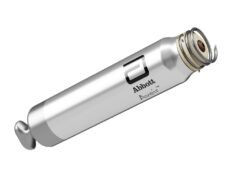
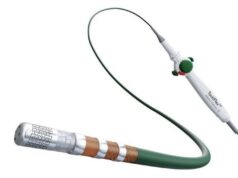
 Abbott has announced new clinical data from two late-breaking presentations at the 2026 AF symposium (5–7 February, Boston, USA) that demonstrate the safety and efficacy of the company’s minimally invasive therapies to treat people with atrial fibrillation (AF)—including 12-month findings that reinforce the long-term safety and performance of the Volt pulsed field ablation (PFA) system, which were simultaneously published in JACC: Clinical Electrophysiology. Positive results were also presented on Abbott’s sensor-enabled TactiFlex Duo ablation catheter.
Twelve-month data from the VOLT-AF global investigational device exemption (IDE) study found that the Volt PFA system had an “industry-leading” success rate (84.2%) of freedom from documented rhythm recurrence among all competitive PFA products to treat paroxysmal AF, according to the company. Abbott’s system also delivered strong results as a treatment option for persistent AF, with nearly 68% of patients remaining free from an additional AF episode following a Volt ablation.
Further key findings from this single-arm trial conducted at approximately 40 centres in the USA, Europe, Canada and Australia through one year include the fact that physicians were able to use fewer therapy applications—an average of just 4.6 applications per vein—as compared to other on-market competitive PFA systems. Additionally, the trial found that fewer than 6% of patients required a repeat ablation, which Abbott claims is also “one of the lowest rates in the industry”.
Patients reported a significant improvement in quality of life as measured by the Atrial fibrillation effect on quality-of-life (AFEQT) score. This self-assessment—which evaluates changes to a person’s overall symptoms and social wellbeing—showed that scores rose from 63.6 to 91.4 for paroxysmal AF patients treated with Volt and from 64.2 to 91.4 for persistent AF patients. The study also found zero patient complications related to either an unintended injury to the oesophagus or haemolysis.
“The data for Volt confirm what I see firsthand in the procedure room with this next-generation PFA device,” said Atul Verma (McGill University, Montreal, Canada), who treated patients as part of VOLT-AF IDE and presented late-breaking data from the study at the 2026 AF symposium. “The system’s unique design enables a high degree of freedom from AF for patients, and its impressive safety profile reduces PFA-specific complications, such as haemolysis, which negatively impacts other parts of the body.”
The Volt PFA system secured both US Food and Drug Administration (FDA) approval and a CE mark in Europe last year, and commercial cases have begun in the USA with expansion in Europe continuing too.
Six-month data from the FOCALFLEX global CE-mark trial—also presented at the AF symposium—confirmed the safety and effectiveness of TactiFlex Duo for treating more complex cases of AF, according to Abbott. The trial found a clinically meaningful success rate (81%) of freedom from documented rhythm recurrence among paroxysmal AF patients. Patients’ self-reported quality-of-life scores also climbed from 64.4 to 86.4. These data from more than 20 centres in the EU, UK and Australia contributed to the device’s recent CE-mark approval.
TactiFlex Duo is designed for focal ablation, using a dual-energy platform, which gives physicians the ability to tailor AF therapy delivery in two ways instead of a single energy mode, Abbott also states in a recent press release. Clinicians can use the catheter to target and treat an irregular heart rhythm with either radiofrequency or PFA based on a patient’s individual needs and anatomy—including the “most challenging” cases.
“With the rising rates of AF around the world, data from the Volt PFA and TactiFlex Duo trials help empower physicians with further confidence in using these devices to treat people with AF—from the recently diagnosed to the most complex cases,” said Christopher Piorkowski, chief medical officer of Abbott’s electrophysiology business. “These studies help solidify our treatment offerings for AF as we strive to challenge the status quo to develop even better tools that physicians can rely on to care for their patients.”