 Argá Medtech has announced positive clinical results from the BURST-AF first-in-human trial, demonstrating the safety, effectiveness and durability of its Coherent sine-burst electroporation (CSE) system for the treatment of paroxysmal and persistent atrial fibrillation (AF). Data presented at the 2026 AF symposium (5–7 February, Boston, USA) showed 94% overall lesion durability, 100% procedural success and an excellent safety profile using a single, stylet-driven, multi-configurable catheter, according to the company.
“While pulsed field ablation [PFA] has transformed AF treatment, many systems report low durability for the complex lesion sets beyond pulmonary vein isolation [PVI],” said BURST-AF investigator Ante Anic (KBC Split Hospital, Split, Croatia). “In this study, the CSE system enabled efficient, single-catheter ablation across multiple lesion sets with high durability, short ablation times of 20 minutes for pulmonary vein isolation, and an additional 15 minutes for additional linear ablations. These data support sine-burst electroporation as an important next step in AF ablation.”
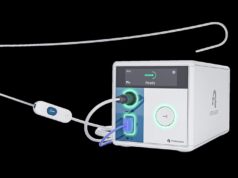
Argá Medtech says its CSE PFA platform utilises a proprietary CSE PFA generator and a multi-configurable catheter to enable “unmatched flexibility” in the treatment of AF, with the system’s sinusoidal/sine wave allowing energy delivery to be tailored to the different depths of tissue targeted for ablation. The unique waveform is delivered using a single, all-in-one catheter with a form factor that can be shaped to create circular, linear or focal ablation lesions, which—according to the company—eliminates the need for catheter exchanges, minimising the risk of introducing air bubbles as one catheter is removed and another is reinserted, as well as potentially reducing procedural time and costs.
BURST-AF enrolled 101 patients with drug-refractory paroxysmal (59%) or persistent (41%) AF at four clinical sites. Patients underwent cardiac ablation—including PVI, posterior wall isolation (PWI) and cavo-tricuspid isthmus (CTI) ablation—with the CSE system. They were remapped at 60–90 days post-ablation, and also assessed at six and 12 months post-procedure.
Key findings from the study include a 100% rate of procedural success in both paroxysmal and persistent AF; PVI durability of 97.4% and 91.7% in paroxysmal and persistent AF, respectively, as per remapping at 60–90 days; and CTI durability of 100% and 97.4% in paroxysmal and persistent AF, respectively, at 60–90 days. Argá Medtech also reports that, in patients with persistent AF, inferior and superior PWI durability was 92.1% and 84.2%, respectively.
Additionally, at six-month follow-up, 56 of 58 (96.6%) paroxysmal and 35 of 38 (92.1%) persistent AF patients were free of AF, atrial flutter, and atrial tachycardia—with or without anti-arrhythmic drugs (AADs). At 12-month follow-up, 50 of 55 (90.9%) paroxysmal and 28 of 34 (82.4%) persistent AF patients were free of AF, atrial flutter and atrial tachycardia while off AADs.
Finally, the company reports that safety results showed no pulmonary vein stenosis, silent cerebral events (SCE)/silent cerebral lesions (SCL), clinically apparent coronary spasm, phrenic nerve damage/paralysis, oesophageal damage, or conduction disorders.
During the 2026 AF symposium, Argá Medtech also announced that its COHERENT-AF investigational device exemption (IDE) clinical trial has reached 50% enrolment. This prospective, non-randomised trial is designed to evaluate the safety and effectiveness of the CSE system in patients with paroxysmal and persistent AF, and will enrol up to 360 patients across clinical sites in the USA and Europe.
“These findings [from BURST-AF] validate the clinical and procedural benefits of our CSE system, and further increase our confidence that the ongoing US IDE study will achieve its endpoints,” commented David Neale, co-founder and chief executive officer (CEO) at Argá Medtech. “Our ability to reach 50% enrolment in the IDE study in only four months underscores the high interest in our unique PFA solution and its potential benefits among the interventional electrophysiology community. We are committed to generating a robust body of data that will support regulatory and an eventual PMA [premarket approval] submission for US FDA [Food and Drug Administration] approval of the CSE system.”