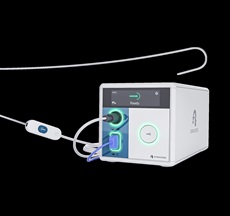
Atraverse Medical has announced the presentation of new clinical and preclinical data at the 2026 AF symposium (5–7 February, Boston, USA), further validating the safety, performance and workflow advantages of the company’s Hotwire transseptal access system.
According to Atraverse, findings from three presentations demonstrated reduced unintended tissue injury, low radiofrequency (RF) duration and consistent performance across diverse procedural workflows, reinforcing the clinical value of Hotwire’s impedance-guided technology and zero-exchange approach to left heart access.
A presentation by Jeremiah Wasserlauf (Endeavor Health, Chicago, USA) showed that the Hotwire’s large electrode combined with an impedance-guided RF generator resulted in zero unintended left atrial injury events compared to >50% with a small-electrode RF guidewire system, while also significantly reducing RF duration and total energy delivery in an ex-vivo porcine model.
Additionally, a presentation from Devi Nair (St Bernard’s Heart and Vascular Center, Jonesboro, USA) demonstrated that the Hotwire system—which utilises impedance-sensing technology to detect entry to the left atrium—provided safe and consistent performance across a variety of procedure types, with low RF duration and total energy delivery, as well as enabling a simplified, zero-exchange workflow. This multicentre first-in-human observational study included approximately 500 patients and found a 100% rate of procedure success.
Nair also delivered a presentation detailing multicentre first-in-human experiences with the Hotwire RF transseptal guidewire, demonstrating that the device provided safe and effective left heart access across a broad range of procedure types, introducer sheaths, and operator workflows—achieving a 100% rate of procedural success in more than 1,000 transseptal procedures, with 29% performed using a zero-fluoroscopy approach. No adverse events were reported, while enabling efficient transseptal access and a simplified workflow, Atraverse claims.
“These data reinforce the clinical importance of controlled RF delivery and impedance-guided shutoff during transseptal access,” said Steven Mickelsen, co-founder, co-inventor and chief translational science officer at Atraverse. “The consistency of results across preclinical and first-in-human studies highlights the strength of the Hotwire platform, and its potential to set a new standard for left heart access.”