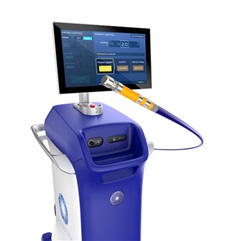
Boston Scientific Corporation has received a CE mark for the Farapoint pulsed field ablation (PFA) catheter, which is intended for use in the treatment of right atrial flutter (AFL) by administering ablation to the cavotricuspid isthmus (CTI) area of the heart.
According to the company, this CE mark represents a new cardiac arrhythmia indication for the Farapulse PFA platform and brings the potential benefits of the procedure to those living with AFL—who typically present with a consistent yet rapid heart rhythm.
The Farapoint PFA catheter provides CTI ablation for right AFL by delivering predictable, point-by-point linear and focal lesions across complex heart anatomies and through scar tissue. The catheter performs optimised and controlled lesions, with a depth of up to 7mm, ensuring effective conduction block without compromising the safety of the surrounding cardiac tissue, Boston Scientific notes in a press release.
“The Farapulse PFA platform is a transformational advancement in the treatment of paroxysmal and persistent atrial fibrillation [AF], and the most clinically validated PFA system, with 500,000 patients treated worldwide,” said Caroline Bravo, vice president of rhythm management for the Europe, Middle East and Africa (EMEA) region at Boston Scientific. “Today’s announcement reflects the strength of the clinical evidence demonstrating Farapulse’s safety, effectiveness and reliability for people living with atrial flutter.”
According to Boston Scientific, the CE-mark submission was supported by data from phase two of the ADVANTAGE AF clinical trial demonstrating the efficacy and safety of the Farapulse PFA platform and the Farapoint PFA catheter as an adjunctive treatment for persistent AF and AFL.
The study found that 97.9% of the 141 patients who received CTI ablation with the Farapoint PFA catheter did not experience AFL recurrence—a comparable efficacy rate versus the 98% seen with standard-of-care radiofrequency ablation (RFA) studied in phase one of the trial. Similarly, CTI ablation with the Farapoint PFA catheter saw comparable safety rates to RFA (2.1% vs 2% at 90 days following the procedure) and the administration of prophylactic nitro-glycerine during CTI ablation led to zero coronary artery spasms.
An additional subanalysis showed that the Farapoint PFA catheter provided significantly greater predictability in CTI applications and overall procedure times compared with RFA. Boston Scientific’s recent release states that these findings point to real-world procedural reliability, potentially resulting in more consistent workflows and procedural efficiencies.
“PFA is already proven to deliver more effective ablation procedures for the treatment of AF, compared with standard RFA and cryoablation treatments,” commented Andrea Natale (University of Rome Tor Vergata, Rome, Italy). “We are now seeing the promise of PFA in treating AFL—and the Farapoint PFA catheter, along with wider mapping and 3D visualisation abilities of the Farapulse PFA platform, can offer physicians the ability to optimise workflows and tailor AFL procedures.”
Boston Scientific says it will now launch the Farapoint PFA catheter in the EMEA region.