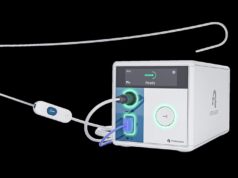
 Pulse Biosciences has announced late-breaking clinical data from the nPulse cardiac catheter first-in-human feasibility study, demonstrating the successful treatment of atrial fibrillation (AF) across 150 patients alongside rapid procedure times and minimal adverse effects. The data were presented at the 2026 AF symposium (5–7 February, Boston, USA).
Key findings from the feasibility study include a 100% rate of procedural success in 75 evaluable patients at six months and a 96% rate of procedural success across 47 evaluable patients at one year. The study also demonstrated that the average number of applications was 16.1 per procedure, while total procedure and fluoroscopy times were 65 and 9.8 minutes, respectively, and left atrial dwell time was 21 minutes. Regarding the nPulse catheter’s safety profile, 1.3% of the 150 patients assessed experienced a serious adverse event (SAE) relating to the study’s primary safety endpoint.
“These six- and 12-month data demonstrate a strong safety profile with highly effective and durable PVI [pulmonary vein isolation] achieved with the nPulse cardiac catheter ablation system, suggesting that this system has the ability to considerably advance the treatment of AF,” said Vivek Reddy (Mount Sinai Fuster Heart Hospital, New York, USA). “The conformable catheter design, differentiated energy, and zero rotation workflow, have produced highly efficient and effective results when compared to other AF feasibility studies in my experience, highlighting the nPulse cardiac catheter’s simple and effective workflow for PVI.”
To date, the ongoing feasibility study assessing the initial safety and efficacy of nPulse in AF treatment has seen a total of 165 patients treated by nine investigators in Europe—including the Na Homolce Hospital (Prague, Czech Republic) led by Reddy and Petr Neuzil; Jessa Hospital (Hasselt, Belgium) led by Johan Vijgen; and Tor Vergata Hospital (Rome, Italy) led by Andrea Natale. The initial cohort of treated patients has been evaluated by remapping at around three months, and for rhythm control completed at six and 12 months post-ablation procedure.
“This dataset marks an important milestone for Pulse Biosciences, and highlights an exceptional combination of improved workflow and outcomes results,” commented Paul LaViolette, the company’s chief executive officer (CEO) and co-chairman. “These results validate the safety, effectiveness, lesion quality and speed benefits that clearly differentiate the nPulse cardiac catheter ablation system as a first-in-class system showing the potential to be best in class. We extend our gratitude to all the electrophysiologists, staff and patients who continue to support our clinical work.”
“These impressive results highlight the nPulse cardiac catheter as a first-in-class system for treating AF,” added David Kenigsberg, chief medical officer of electrophysiology at Pulse Biosciences. “In a clinical field where a 20–25% recurrence rate is expected, these results exceed expectations for PVI. Nanosecond PFA [pulsed field ablation] energy and integration into a 3D mapping system have the ability to offer precise, lasting pulmonary vein isolation. We’re poised to revolutionise atrial fibrillation treatment, and we are excited to begin treating additional patients in Europe and the USA as we initiate our pivotal IDE [investigational device exemption] study.”