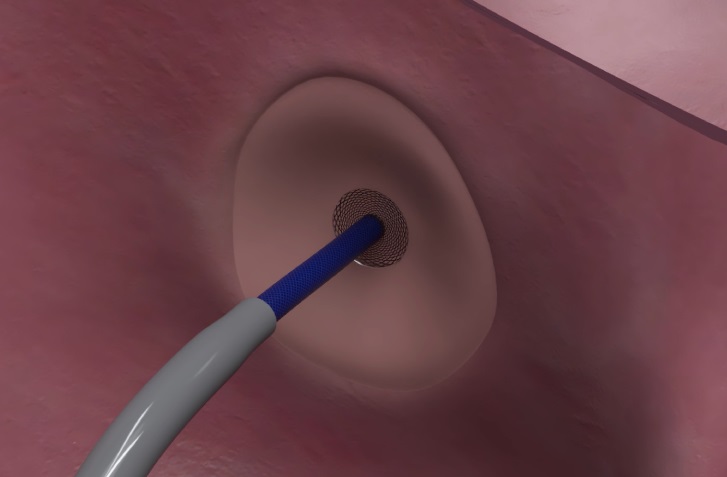
Protaryx Medical has announced the successful completion of the first US commercial cases using its US Food and Drug Administration (FDA)-cleared Protaryx transseptal puncture device.
The procedures were performed at UC Davis Health in Sacramento, USA, by interventional cardiologist Gagan D Singh (University of California Davis Health, Sacramento, USA). The first two commercial cases were performed during left atrial appendage closure (LAAC) procedures and successfully achieved transseptal crossing on the first attempt.
The milestone marks the beginning of US commercial use of the Protaryx transseptal puncture device following FDA 510(k) clearance earlier this year.
The Protaryx system was developed to provide physicians with a fundamentally different approach to transseptal access, the company says in a press release. Its highly echogenic, extendable atraumatic EchoTip is designed to enable direct visualisation and precise positioning while reducing dependence on fluoroscopy. The system combines this highly echogenic positioning capability with RF-assisted crossing and a zero-exchange design intended to simplify and streamline left-heart access.
“These first commercial procedures provided an opportunity to evaluate the Protaryx device in routine clinical practice,” said Singh. “The device was clearly visible under echocardiography and allowed us to assess the fossa and perform transseptal access without rewiring. We successfully completed both procedures and will continue to evaluate the technology as we gain additional clinical experience.”
“Innovation isn’t another version of the same idea,” said David Mester, CEO of Protaryx Medical. “We didn’t build Protaryx to be a me-too device. We built it because we believed transseptal access deserved a fundamentally different approach. These first commercial cases allowed us to see that approach translate from design intent into real-world clinical use. Sometimes true innovation is difficult to appreciate in a drawing or specification; you have to see it in the hands of a physician. We believe Protaryx provides a meaningful difference in how physicians can approach left-heart access.”