StimCardio Medical has announced positive results from the randomised, double-blind, sham-controlled NeuroPulse pilot study evaluating non-invasive median nerve stimulation (MNS) following atrial fibrillation (AF) ablation. The study was selected for late-breaking clinical science presentation at HRX Live 2026 (18–20 September, Atlanta, USA) and simultaneously published in Heart Rhythm.
The results were presented by Vivek Reddy (Mount Sinai Hospital, New York, USA), lead investigator of the study.
Key findings from the study include a statistically significant reduction in recurrent atrial arrhythmia events, with 12 events with MNS compared to 28 with sham in the post-blanking sensitivity analysis (p=0.025). Additionally, 90% freedom from atrial arrhythmias at six months following the 60-day blanking period was observed compared to 80.8% with sham—a difference that was not statistically significant—while the study also saw no MNS- or device-related serious adverse events.
As stated in a StimCardio press release, advances in mapping, catheter technology and energy delivery have transformed AF ablation. Pulsed field ablation (PFA) represents the latest major advancement yet, for nearly two decades, a persistent efficacy gap has remained. In the 2023 randomised ADVENT trial led by Reddy, one-year treatment success—a composite measure that included freedom from recurrent atrial arrhythmia—was 73.3% with PFA and 71.3% with conventional thermal ablation.
The NeuroPulse study, however, investigates a different biological mechanism. Rather than further ablating cardiac tissue, MNS is designed to engage peripheral neural pathways that influence autonomic regulation of cardiac rhythm. The non-invasive, wearable approach could give electrophysiologists an additional therapeutic tool beyond the ablation procedure, extending AF care into the home and patients’ daily lives, StimCardio also claims.
“The question is not whether ablation works; it clearly does,” said Reddy. “The question is how we continue to improve outcomes for patients who experience recurrent arrhythmia despite increasingly advanced ablation technologies. The NeuroPulse results provide an encouraging clinical signal that non-invasive, wearable neuromodulation following ablation may offer a fundamentally different way to approach that remaining challenge. These findings warrant confirmation in a larger multicentre clinical trial.”
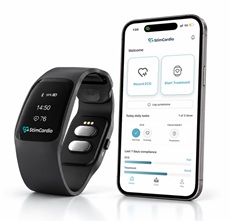
StimCardio is developing Rhyvive—an investigational, physician-prescribed, wrist-worn device designed as a non-invasive treatment adjunct to AF ablation. The closed-loop system is designed to deliver personalised neuromodulation, informed by continuous physiological sensing, under physician oversight.
“Our vision is to extend what electrophysiologists can do for patients beyond the ablation procedure,” commented Amos Ziv, founder and chief scientific officer of StimCardio. “Despite extraordinary advances in ablation and the work electrophysiologists are doing for patients, an efficacy glass ceiling remains. The NeuroPulse pilot provides a clinical signal that the next frontier in AF treatment may lie outside the heart itself, with non-invasive, wearable neuromodulation opening the possibility of an entirely new treatment category for electrophysiologists and their patients. We look forward to building on these findings in our upcoming pivotal trial.”