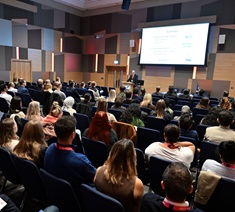
 The 2026 Heart Rhythm Congress (HRC; 11–13 October, Birmingham, UK) is set to bring the international heart rhythm community—clinicians, researchers, allied health professionals, patients and industry—together once again, focusing on artificial intelligence (AI), the future of cardiac ablation, and more.
Having been organised for more than two decades by Arrhythmia Alliance—an international, patient-led charity—HRC’s aim is to educate healthcare professionals and patients on the latest advances, evidence and technology in cardiac rhythm management.
A recent press release states that HRC 2026 is set to deliver “the most comprehensive and exciting scientific programme yet”. Developed by HRC’s scientific committee representing a diverse range of disciplines, and led by programme director Shouvik Haldar (Royal Brompton and Harefield Hospitals, London, UK), the congress covers the challenges, practical solutions and evidence-based management strategies that healthcare professionals caring for arrhythmia patients “need to know”.
“At HRC, the measure of good education is not simply what delegates hear in the lecture theatre, but what they do differently in their next clinic,” said Haldar. “HRC 2026 brings the whole heart rhythm community into one conversation, giving healthcare professionals the opportunity to challenge new ideas, learn practical skills, and decide how the latest evidence and technology should translate into better care. From AI and the next generation of ablation to devices, service design and career development, the programme has been built around the real decisions our colleagues face every day. With 18 category-one CPD [Continuing Professional Development] credits available, delegates will leave not only better informed, but better equipped to make a difference for their patients.”
The HRC 2026 programme is said to reflect six major themes shaping the future of arrhythmia care:
- AI moves into clinical practice—its growing role in detection, diagnosis, ablation, monitoring and risk prediction
- The next era of ablation—beyond the pulsed field ablation (PFA) hype to durability, new energy sources and advanced mapping
- From evidence to implementation—practical approaches to capacity, workflow, remote monitoring and service design
- The future of atrial fibrillation (AF)—from early intervention to left atrial appendage occlusion (LAAO), personalised treatment and next-generation ablation
- The future of pacing and devices—conduction system pacing (CSP), leadless pacing, lead extraction and smarter programming
- A bigger, broader heart rhythm community—more dedicated content for syncope, postural orthostatic tachycardia syndrome (PoTS), nurses, physiologists, trainees, paediatrics and patients
HRC brings the whole care team together in one meeting, alongside a dedicated ‘Patients Day’ that will see hundreds of patients gather to hear presentations by world-leading arrhythmia experts on conditions including AF as well as those causing syncope.
Additionally, based on the popularity of HRC’s career-support sessions and growing demand from delegates, a new, dedicated ‘Career Zone’ will provide an informal setting in which healthcare professionals at every career stage can seek advice, discuss professional development and learn from experienced members of the heart rhythm community.
Joint symposia on topics ranging from ventricular arrhythmias to pharmacological considerations in AF will be explored alongside several international organisations: the Heart Rhythm Society (HRS), World Society of Arrhythmias, European Heart Rhythm Association (EHRA), AF Association and Syncope Trust and Reflex Anoxic Seizures (STARS). Simulator training will also be available for hands-on learning, and industry partners will be exhibiting the latest technologies and innovations available.
“Arrhythmia Alliance was founded over 20 years ago on a simple belief: that no one affected by a heart rhythm disorder should be left behind,” commented Arrhythmia Alliance founder and trustee Trudie Lobban. “HRC is where that mission comes to life, bringing together clinicians, researchers, allied health professionals, industry professionals and patients from around the world for the 22nd year running. Each year, we raise the bar—because, when the whole care team learns together, it changes outcomes for patients. That is what Arrhythmia Alliance has always stood for, and it is what HRC delivers.”