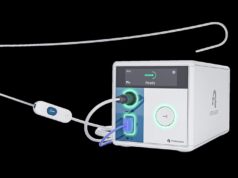
Atraverse Medical has announced accelerating market uptake for its Hotwire transseptal access system driven by rapid adoption in catheter labs nationwide and expanding use among electrophysiologists across the USA, according to a company press release.
The release adds that this growing commercial traction is further supported by preclinical and clinical data reinforcing the system’s safety profile, performance, and workflow advantages.
Since its limited market release in 2024, Hotwire has been clinically adopted in dozens of leading cardiac hospitals across the nation, with expanding use among nearly 100 leading cardiac electrophysiologists and interventional cardiologists, reflecting both the system’s ease of integration and its value in diverse procedural workflows, Atraverse claims.
Hotwire has been successfully used in nearly 3,000 left-heart access procedures—including 29% performed with zero fluoroscopy—and achieved 100% procedural success in a multicentre first-in-human study of nearly 500 patients.
Data presented recently at the annual congress of the European Heart Rhythm Association (EHRA; 12–14 April 2026, Paris, France) highlighted no incidence of unintended left atrial injury following transseptal crossing using Hotwire compared to >50% incidence of left atrial tissue damage observed with other radiofrequency (RF) guidewires.
“In my experience, the Hotwire system enhances both the efficiency and consistency of left-heart access,” said Devi Nair (St Bernard’s Heart and Vascular Center, Jonesboro, USA), a principal investigator in the multicentre studies. “It provides controlled, reliable entry into the left atrium, while features like automatic RF shutoff and zero-exchange, sheath-agnostic J-tip and Pigtail guidewires help streamline workflow. Overall, it’s a highly effective platform that integrates easily into a wide range of cases in everyday practice.”
“As a board-certified electrophysiologist, I’ve seen firsthand the challenges that have long been associated with transseptal access, particularly as procedures continue to increase in complexity,” added Steven Mickelsen, co-founder and co-inventor at Atraverse. “I’m incredibly proud of the work our team has done to rethink this foundational step—making it safer, simpler, and more aligned with how physicians actually work.”