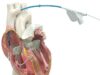
 A new expert consensus statement published recently in the journal Heart Rhythm details the latest recommendations aimed at guiding clinicians and patients in choosing the right cardiovascular implantable electronic device (CIED), and managing these devices over time to reduce complications and support better quality of life.
A press release from the Heart Rhythm Society (HRS)—one of several medical societies involved in developing this new consensus statement—details that, over the past 70 years, CIEDs have become an established treatment option for selected patients with bradycardia, tachycardia, and heart failure. It is estimated that, in 2022, some 800,000 CIEDs were implanted in the USA—and future CIED implant rates, particularly for permanent pacemakers, are expected to increase further due to the ageing global population.
CIEDs traditionally use leads that connect the pulse generator to cardiac tissue. However, since the publication of the 2017 HRS expert consensus statement on CIED lead management and extraction, the field has evolved rapidly with the publication of new evidence on CIED transvenous lead management; development of new CIED technologies that are leadless or use leads implanted outside the vascular system; wide adoption of leads that do not have a lumen; new lead extraction tools; and new cardiac and vascular procedures that have lead management implications.
“A holistic approach to CIED selection and use is required—as is, by extension, consideration of potential lead management implications over a patient’s lifetime,” said Yong-Mei Cha (Mayo Clinic, Rochester, USA), chair of the writing committee for the recently published consensus statement. “The document we present today is intended to help clinicians in their decision-making process for managing leads and CIED implant considerations, and updates the 2017 expert consensus statement.”
The consensus statement’s writing committee consisted of internationally recognised experts from five countries in the fields of clinical electrophysiology, paediatric electrophysiology, cardiothoracic anaesthesiology, cardiothoracic surgery, and infectious diseases, representing multiple professional societies. They systematically reviewed scientific evidence and translated their findings into recommendations to improve the quality of care in CIED lead management. This current expert consensus statement focuses on providing an update on practical clinical guidance in the broad field of lead management, including extraction and management of traditional CIEDs that use transvenous leads, CIEDs with extravascular or subcutaneous leads, and leadless CIEDs.
The new recommendations address several key areas, including the latest CIED technologies with advantages over transvenous leads; new evidence supporting diagnosis, treatment and prevention for CIED infection; appropriate lead management in transcatheter tricuspid valve replacement for tricuspid regurgitation; and standardisation of transvenous lead extraction approaches, protocols and facilities to improve the outcomes of CIED lead management and extraction.
“Newer technologies in CIED offer the potential to decrease the clinical challenges and morbidity associated with intravascular devices,” Cha added. “Since the 2017 consensus statement, the use of leadless pacing and non-vascular implantable cardioverter defibrillators has increased substantially, ushering in a new paradigm of non-vascular cardiac rhythm management.
“Future lead management considerations must be taken into account when any CIED—including leadless pacemakers—is implanted. At initial CIED implant, or subsequently when a generator or lead needs to be replaced or revised, device choice and lead management issues include clinical indication, patient comorbidities, predicted patient lifespan, lead performance, consequences of any future CIED complication, and potential clinical benefit and risks. This collaborative approach ensures that device and lead selection, and management strategies, align with the patient’s long-term health, personal preferences and quality of life to optimise outcomes over time.”