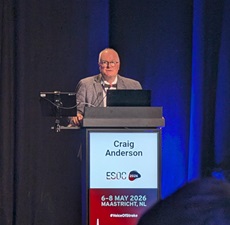
Results from the CRAFT randomised controlled trial (RCT)—presented this week at the European Stroke Organisation Conference (ESOC; 6–8 May, Maastricht, Netherlands)—show that targeting a home systolic blood pressure (BP) level of less than 120mmHg did not significantly reduce major cardiovascular events compared with a standard target of less than 135mmHg in adults with atrial fibrillation (AF).
While the primary endpoint showed no significant difference between groups, significant heterogeneity across subgroups suggests that a more individualised approach to BP lowering may be considered in selected patients, according to the study investigators.
The CRAFT trial was an open-label, blinded-endpoint RCT enrolling patients aged 18 years or older with paroxysmal or persistent AF and an additional cardiovascular risk factor. Following a two-week open run-in phase, participants were randomly assigned to intensive treatment targeting a home systolic BP <120mmHg or standard treatment targeting <135mmHg. The primary composite endpoint, analysed using a hierarchical win ratio approach, comprised cardiovascular death, stroke, myocardial infarction (MI) and hospitalisation for heart failure—in that order of priority.
A total of 1,676 patients (mean age, 69 years; 40% female) were randomised at 157 hospitals in China and Japan, with 838 patients in each group, and followed up for a mean of 2.5 years. A mean between-group separation in home systolic BP of 8.3mmHg was achieved over follow-up. Event counts in the intensive versus standard treatment groups were 27 versus 33 for cardiovascular deaths, 70 versus 54 for strokes, 16 versus 4 for MIs, and 104 versus 137 for hospitalisations for heart failure.
The primary hierarchical composite endpoint showed no significant difference between groups (win ratio, 1.02; 95% confidence interval [CI], 0.9–1.15; p=0.76)—a result consistent with a time-to-first-event analysis (hazard ratio [HR], 0.97; 95% CI, 0.76–1.25). Rates of serious adverse events were similar between groups at 44% versus 45.1% in the intensive group, and standard group, respectively.
Highly significant heterogeneity in treatment effect was observed across subgroups defined by sex and age, with treatment benefits seen in younger adults and males.
“This trial draws attention to the importance of heart failure as a major adverse complication of AF where more intensive BP control may offer benefits in younger, more robust high-risk patients with AF,” said Craig Anderson (The George Institute, Sydney, Australia), who presented these results at ESOC 2026.
The researchers conclude that intensive BP lowering to a target below 120mmHg did not reduce major cardiovascular events compared with standard treatment in adults with AF, but the significant heterogeneity of effect across subgroups—particularly by sex and age—provides a basis for considering a more individualised approach to intensive BP lowering in this population.