 Abbott has announced late-breaking data from four trials that demonstrate strong clinical outcomes within its pulsed field ablation (PFA) and conduction system pacing (CSP) portfolios to treat heart rhythm disorders.
The data—presented at the 2026 Heart Rhythm Society (HRS) annual meeting (23–26 April, Chicago, USA)—include six-month results from the FlexPulse investigational device exemption (IDE) study examining the treatment of complex atrial fibrillation (AF) cases with the sensor-enabled TactiFlex Duo ablation catheter as well as new clinical evidence for posterior wall ablation with the Volt PFA system.
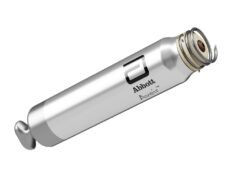
Data were also presented on Abbott’s ASCEND CSP IDE trial of the company’s investigational UltiSynq CSP implantable cardioverter-defibrillator (ICD) lead and a first-in-human evaluation of the LEAP2 chronic early feasibility trial for the investigational Aveir CSP leadless pacemaker system.
Positive FlexPulse IDE results
New six-month data from the FlexPulse IDE study provide early insights showing positive patient outcomes with the sensor-enabled TactiFlex Duo ablation catheter, and confirm the strong safety and efficacy profile seen in the CE-mark study for treating complex AF cases, according to Abbott. The TactiFlex Duo catheter provides physicians with two energy modes to tailor therapy based on a patient’s complex disease or anatomy: radiofrequency (RF) ablation and PFA.
The late-breaking six-month data from the 188-patient FlexPulse IDE study show that 87% of patients reported being free from documented arrhythmias. The study also revealed a high safety profile (98.3%) with no major safety events. Additionally, 93.3% of patients were treated exclusively with PFA, demonstrating that this energy source alone was successful in treating complex cases, Abbott notes, further stating that physicians efficiently treated their patients in the study with 93.9% not requiring an additional ablation after the first round of therapy.
“The Abbott TactiFlex Duo catheter offers the convenience of seamlessly switching treatment between RF and PFA based upon the patient’s anatomy, and their personalised ablation plan,” said Jonathan Piccini (Duke University Medical Center, Durham, USA), who presented the late-breaking data at HRS 2026. “While RF has long been a well-established ablation approach, with this study, we have been able to show that the TactiFlex Duo’s point-to-point PFA is an effective approach for a significant number of our patients.”
The FlexPulse IDE study was designed to secure US Food and Drug Administration (FDA) approval for TactiFlex Duo, with the catheter having received a CE mark in Europe earlier this year.
Promising findings on CSP devices
Results from two late-breaking clinical trials also presented at HRS 2026 evaluated Abbott’s investigational leadless and traditional pacing/defibrillation CSP technologies designed to deliver left bundle branch area pacing (LBBAP)—an approach intended to more closely replicate the heart’s natural electrical activation. Both data presentations were simultaneously published in the journal Heart Rhythm.
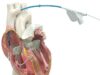
The ASCEND CSP IDE trial evaluated the investigational high-voltage UltiSynq CSP ICD lead designed to be implanted in the LBBA or the right ventricle to deliver both pacing and defibrillation. Three-month data show that UltiSynq CSP successfully met the study’s prespecified primary safety and effectiveness endpoints.
Key findings included a high safety profile (97.5%) with no lead-related major safety events reported; a high success rate (99%) meeting LBBAP criteria, which Abbott says can be compared to results from previously reported trials; and an 86% success rate being met using the more stringent LBBP or likely LBBP criteria. Additionally, an average of 0.9 repositioning attempts per patient was achieved. The study also showed a 100% rate of defibrillation success, with the majority (92.5%) achieving first shock success at 20J. Abbott further reports that no patients required repositioning of the ICD lead to reach effective defibrillation, and the study achieved stable electrical performance at three months with no inappropriate therapies delivered due to P-wave or T-wave oversensing.
“Physicians are increasingly using LBBAP for pacemaker patients, because it is associated with improved physiological activation compared with traditional pacing on the right side of the heart,” said Rahul Doshi (Arizona State University, Tempe, USA). “The data from the ASCEND trial show that an ICD lead designed for physiologic pacing can support restoration of normal heart rhythms when placed in the LBBA. These early results suggest the potential to extend the benefits of physiologic pacing to ICD patients in an efficient manner.”
At HRS 2026, Abbott also presented late-breaking results from the first-in-human LEAP2 clinical study evaluating the company’s investigational Aveir CSP leadless pacemaker system. The one-month data from this 19-patient study found a high implantation success rate along with delivery of pacing that closely followed the heart’s natural electrical pathways; reliable electrical performance and functioning at the time of implant, and through the first month of follow-up; and consistent communication between devices in a dual‑chamber pacemaker setting.
New Volt PFA data
Lastly, late-breaking six-month data from the Volt CE-mark extension cohort trial demonstrated positive outcomes for patients in whom the posterior wall of the heart was treated in addition to the standard treatment. The Volt PFA system secured both US FDA approval and a CE mark in Europe last year.
New data from this trial saw physicians cite the device’s ease of use and intuitive design as contributors to efficiently treat their patients with fewer therapy applications—4.1 applications per vein and 10.7 per posterior wall isolation (PWI), on average—compared to other on-market PFA systems. A high safety profile with no reported patient or procedure-related complications was also demonstrated.
“Treating abnormal heart rhythms is not a siloed or one-size-fits-all approach, which is why Abbott is creating a holistic cardiovascular portfolio that empowers physicians to care for a wide range of arrhythmias,” said Priya Jagasia, divisional vice president of regulatory, clinical, reimbursement and strategic initiatives at Abbott. “The data from these clinical trials serve as a cornerstone for the new innovations we’re developing to help people live healthier lives.”