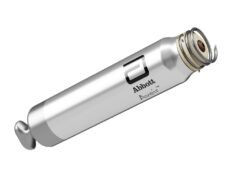
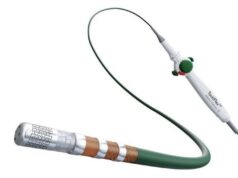
 Initial one-year outcomes from the Leadless ARRIVE real-world study—presented at the annual congress of the European Heart Rhythm Association (EHRA; 12–14 April 2026, Paris, France) and simultaneously published in EP Europace—have demonstrated that Abbott’s Aveir AR leadless atrial pacemaker significantly reduces both short- and long-term complications as well as device-related reinterventions compared to traditional transvenous pacemakers for patients with sinus node dysfunction (SND) who do not have atrioventricular block.
“The number of sick sinus syndrome diagnoses and hospitalisations in the USA increases every year due to the ageing population,” stated Kent Nilsson (Piedmont Athens Regional, Athens, USA), who presented these data at EHRA 2026. “The ARRIVE findings reinforce that Aveir AR significantly reduces complications and reinterventions, which can lead to fewer hospital visits and better outcomes.”
The Leadless ARRIVE real-world study is a retrospective observational study of US Medicare fee-for-service beneficiaries that included 428 Aveir AR leadless pacemaker recipients, 39,881 dual-chamber transvenous (DCTV) pacemaker recipients, and 389 right-atrial transvenous (RATV) pacemaker recipients.
As per an Abbott press release, Aveir AR was found to be associated with lower complication and reintervention rates when compared to transvenous pacemakers with comparable one-year mortality rates between groups. Key data points include:
- At one year, overall complications were dramatically reduced in the Aveir AR group (adjusted 3.6%) compared to DCTV (8.5%), representing a 60% reduction in risk, and Aveir AR showed fewer complications (adjusted 3.3%) than RATV (7.5%) too, also translating into a 60% reduction
- Device-related reinterventions—including revisions, removals, or replacements—were substantially lower for Aveir AR recipients, with a 60% lower likelihood compared to DCTV (adjusted 1.8% vs 4.5%, respectively) and a 70% lower likelihood compared to RATV (adjusted 1.5% vs 4.7%, respectively), with this reduction largely attributed to the avoidance of lead- and pocket-related issues inherent to transvenous systems
- Despite Aveir AR recipients having a higher comorbidity burden compared to DCTV recipients based on the Charlson comorbidity index, one-year all-cause mortality rates were comparable across all three groups (Aveir AR, 9.7%; DCTV, 9.1%; RATV, 11.9%)
“At Abbott, we’re driven to develop technology that addresses real-world issues that patients and their doctors face every day,” said Leonard Ganz, chief medical officer for cardiac rhythm management at Abbott. “With the Aveir AR atrial leadless pacemaker, we have been able to revolutionise the field by reducing the lead-related complications typically associated with transvenous pacemakers. The ARRIVE study further reinforces the advancement Aveir AR brings to physicians and patients with SND by lowering the rate of chronic and device-related complications, and requiring fewer device reinterventions than DCTV pacing, which is currently considered the standard of care.”