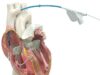
 Implicity has revealed new research presented at the annual congress of the European Heart Rhythm Association (EHRA; 12–14 April 2026, Paris, France) examining why false-positive alerts remain a persistent challenge for implantable cardiac monitors (ICMs)—even in devices equipped with manufacturers’ artificial intelligence (AI) algorithms. While physicians experience this burden every day, the findings provide new insight into why it persists, identifying guideline-based interpretation gaps and signal-detection issues as key drivers of non-actionable alerts across modern ICM platforms, according to Implicity.
In a cross-manufacturer analysis of 2,659 rhythm episodes from 1,710 patients implanted with ICMs from Medtronic, Biotronik, Abbott, and Boston Scientific, findings showed that—even in AI-equipped devices—32.9% of episodes were still non-actionable, with another 30.6% deemed indeterminate. Among devices without proprietary AI algorithms, 45.4% of episodes were non-actionable and 20.1% indeterminate.
To conduct the analysis, an independent expert adjudication committee applied a standardised annotation framework aligned with international electrophysiology guidelines to determine whether device-detected episodes met the diagnostic criteria for clinically meaningful arrhythmias.
According to Implicity, these findings provide new insights into why false-positive alerts persist even as device algorithms have evolved. Investigators found that many alerts stem from how device algorithms interpret rhythm signals relative to guideline-defined arrhythmia criteria. When those interpretations diverge from clinical definitions, benign rhythms or signal artifacts—such as premature ventricular contractions or electrical noise—may be labelled as clinically significant events.
The analysis also identified specific signal-detection mechanisms contributing to these alerts. Episodes labelled as cardiac ‘pause’ events emerged as a major driver, with 46.8% ultimately determined to be false positives caused by R-wave undersensing—whereby the device fails to detect a heartbeat and incorrectly interprets the signal as a pause.
“False-positive alerts remain one of the biggest operational challenges in remote cardiac monitoring,” commented Niraj Varma (Cleveland Clinic, Cleveland, USA). “Every episode flagged by an ICM must be reviewed by a clinician, yet even devices equipped with manufacturer AI algorithms still generate a substantial number of non-actionable alerts. When interpretation varies across device platforms and guideline definitions are not consistently applied, it becomes more difficult for physicians to quickly determine which events truly require clinical attention.”
Building on these findings, investigators conducted a second analysis—also presented at EHRA 2026—to examine whether an additional AI layer could help address these persistent false-positive alerts. The study evaluated the Implicity implantable loop recorder (ILR) electrocardiogram (ECG) analyser—a cloud-based algorithm designed to analyse ICM transmissions across multiple manufacturer platforms using a standardised guideline-based framework.
As per a recent press release from Implicity, results showed that the company’s cloud-based AI algorithm maintained very high sensitivity for detecting clinically meaningful arrhythmias—98.3% in AI-equipped devices and 94.3% in non-AI models—while filtering a substantial proportion of non-actionable alerts. Specificity reached 61.6% and 75.6% respectively, with a consistent positive predictive value of approximately 74% across both groups, demonstrating reliable diagnostic performance across different generations of implantable cardiac monitors.
“Remote monitoring only works if clinicians can trust the alerts they receive,” said Arnaud Rosier, chief executive officer (CEO) and co-founder of Implicity. “When a large share of those alerts are non-actionable, the burden is not just operational—it diverts valuable clinical time from patients who may truly need attention. Our data show that adding a standardised, guideline-based AI layer can reduce that noise while maintaining the high sensitivity needed to detect clinically meaningful arrhythmias.”
The research presented at EHRA 2026 is said to be part of Implicity’s broader clinical programme focused on improving the accuracy and efficiency of remote cardiac monitoring. Additional data will be presented at the 2026 Heart Rhythm Society (HRS) Scientific Sessions (23–26 April, Chicago, USA), according to the company.