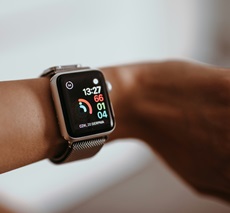
 A new study examining the accuracy of wearable technologies for capturing irregular heartbeats in children has found that the Apple Watch (Apple) can potentially capture arrhythmia events more effectively than traditional ambulatory patch rhythm monitors, as per findings presented as an oral abstract at the 2026 Heart Rhythm Society (HRS) annual meeting (23–26 April, Chicago, USA).
Despite heart rhythm disorders being common in children, researchers have conducted relatively few studies examining whether wearable devices can capture heart rhythm abnormalities in paediatric populations.
The PAWS study included 107 children and adolescents aged 6–18 years (average age, 14 years; 62% female) undergoing outpatient evaluation for heart palpitations using an ambulatory patch rhythm monitor. Participants also received an Apple Watch (Version 5 or later). Over a six-month period, participants used their watch to record an electrocardiogram (ECG) whenever they experienced arrhythmia symptoms, with the device automatically transmitting recordings to a secure digital platform. Electrophysiologists reviewed the ECG tracings, device-generated diagnoses, and tracing quality, and compared arrhythmia events captured by the Apple Watch with those recorded by the patch monitor.
The study found that 79% of Apple Watch ECG tracings recorded during episodes of tachyarrhythmia were rated ‘good’ or ‘excellent’ in quality, meaning specialists could reliably interpret them. The device’s algorithm correctly identified atrial fibrillation (AF) in 73% of ECGs and correctly flagged supraventricular tachycardia (SVT) as ‘high heart rate’ in 75% of cases. Overall, the Apple Watch captured arrhythmia events in twice as many patients captured to the monitor.
“Most research on wearable devices for arrhythmia characterisation has focused on adults, leaving an important gap in paediatric care,” said Scott Ceresnak (Stanford University School of Medicine, Stanford, USA). “Our study is among the first to evaluate how devices like the Apple Watch perform in children. The findings suggest wearable technologies could help transform how we test for, capture and ultimately manage heart rhythm abnormalities in younger patients.”
These findings demonstrate the potential for consumer wearable devices, such as the Apple Watch, to help capture arrhythmias in children, and to complement traditional cardiac monitoring methods, the researchers also feel.
Additionally, because many patients already own wearable devices, clinicians may be able to review ECG data collected outside clinical settings using these technologies, potentially expanding access to heart rhythm monitoring. However, the researchers also note that clinicians should interpret consumer wearable device data within a clinical context, particularly given ongoing challenges with diagnostic specificity—and, as consumer devices continue to offer more health-related features, it is likely they will play an increasingly relevant role in medical care. Future studies should evaluate wearable-based monitoring in larger paediatric populations and across diverse clinical settings, the researchers add.