Johnson & Johnson (J&J) has announced the initiation of the PERSIGMA randomised controlled trial (RCT)—one of the first randomised studies evaluating competitive pulsed field ablation (PFA) technologies. The company claims that, in this rapidly advancing field, there is an increasing need for head-to-head data that provide insights on how different technologies influence outcomes in practice. As such, the “landmark” PERSIGMA RCT reflects a “deliberate step forward” to generate clear, comparative evidence and bring greater rigour to how PFA technologies are evaluated.
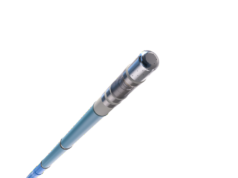
Up to 466 participants across 50 sites will be randomly assigned to treatment with either the Varipulse Pro PFA platform (J&J)—which received a CE mark this year but is not yet approved in the USA—or the Farapulse PFA platform (Boston Scientific) in patients with persistent atrial fibrillation (AF).
The study’s primary endpoints include safety evaluated by the occurrence of primary adverse events, and effectiveness defined by freedom from arrhythmia recurrences during the evaluation period of 60 days after the procedure.
“Having this head-to-head study to compare PFA technologies is extremely important for the electrophysiology community since it will help us better understand how they perform relative to one another and make more informed treatment decisions in daily practice,” said Devi Nair (St Bernard’s Heart and Vascular Center, Jonesboro, USA), co-national study principal investigator of the PERSIGMA trial.
Nair recently featured one of the first cases from the PERSIGMA RCT during the 2026 Heart Rhythm Society (HRS) annual meeting (23–26 April, Chicago, USA), offering an early look at procedural experience with the study protocol and PFA technology, J&J reports.
“PERSIGMA marks an exciting next phase in PFA research—moving the field forward with the rigorous, head-to-head evidence we need in persistent AF,” commented Andrea Natale (St David’s Medical Center, Austin, USA), co‑national study principal investigator of PERSIGMA. “As we broaden evaluation of PFA technology into more complex patient populations, studies like this are essential to helping physicians understand performance, refine procedural strategies and, ultimately, improve outcomes for patients living with AF.”
“PFA has advanced rapidly but not all technologies perform the same, and physicians make decisions without direct comparative data,” added Gregory Michaud, chief medical and scientific officer of electrophysiology at J&J. “We are confident in our PFA technology, our innovation pipeline, and in the strength of our integrated portfolio. With the PERSIGMA RCT, we are raising the bar to better understand how different PFA technologies perform in patients with persistent AF and expand the indication to a broader patient population.”
According to J&J, the Varipulse Pro platform is integrated with the Carto system—a connected ecosystem that brings together imaging, mapping and therapy. This evolution is driven through multigenerational innovative launches, including optimised irrigation rates and enhanced pulse sequences to further improve procedural efficiency and patient outcomes, the company also states. It seeks to build on the platform’s proven precision and safety profile supported by VARIPURE 12-month interim results presented at the annual congress of the European Heart Rhythm Association (EHRA; 12–14 April 2026, Paris, France).
Further updates from HRS
At HRS 2026, the company also launched the Cartosound Sonata module, leveraging artificial intelligence (AI) with the Carto system to automatically transform intracardiac echocardiography (ICE) images into detailed maps, allowing physicians to build accurate models of multiple heart chambers. The module also enables identification and automatic labelling of cardiac structures.
According to J&J, Cartosound Sonata “seamlessly” integrates with both Soundstar Crystal (2D ICE) and Nuvision Nav (4D ICE) ultrasound catheters, enabling physicians to plan and perform treatment across a range of heart rhythm conditions, including AF, ventricular tachycardia, and complex concomitant procedures.
“In my experience, Cartosound Sonata elevates imaging capabilities by streamlining the process of building detailed maps of the heart across multiple chambers using both 2D and 4D ICE technologies, even during the most complex concomitant procedures,” said Luigi Di Biase (Montefiore Health System, New York, USA). “This new module continues to demonstrate the power and versatility of the Carto system and is a clear example of its continued evolution as a key platform in electrophysiology.”
J&J also notes in a recent press release that 2026 marks the 30-year anniversary of its Carto system.
“For 30 years, the Carto system has led progress in electrophysiology, serving as the foundation of a connected platform that brings together imaging, mapping and therapy. Looking into the future, we are decisively moving forward with continuous advancements toward new frontiers in cardiac mapping,” commented Michael Bodner, company group chair for electrophysiology and neurovascular at J&J MedTech. “As we introduce Cartosound Sonata and continue to progress our PFA technologies, we remain committed to innovation that improves how arrhythmias are understood and treated, while evolving and pushing what’s possible in AF care.”
J&J presented new clinical and real-world data on the Varipulse platform for AF at HRS 2026 too, highlighting safety, workflow efficiency, and real-world patient outcomes. In the USA, the latest Varipulse Plus update introduces automated irrigation flow control, reinforcing the platform’s safety profile and supporting procedural consistency and physician confidence—and, building on this advancement, the company recently launched the Varipulse Pro platform in Europe with a new pulse sequence to streamline procedures and enhance workflow efficiency.
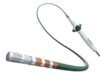
In addition to several poster presentations, a late-breaking abstract delivered by Christopher Porterfield (Aurora Denver Cardiology Associates, Aurora, USA) at HRS 2026 outlined low complication rates across patient and procedural characteristics associated with a variable-loop circular PFA catheter—Varipulse—in real-world practice.